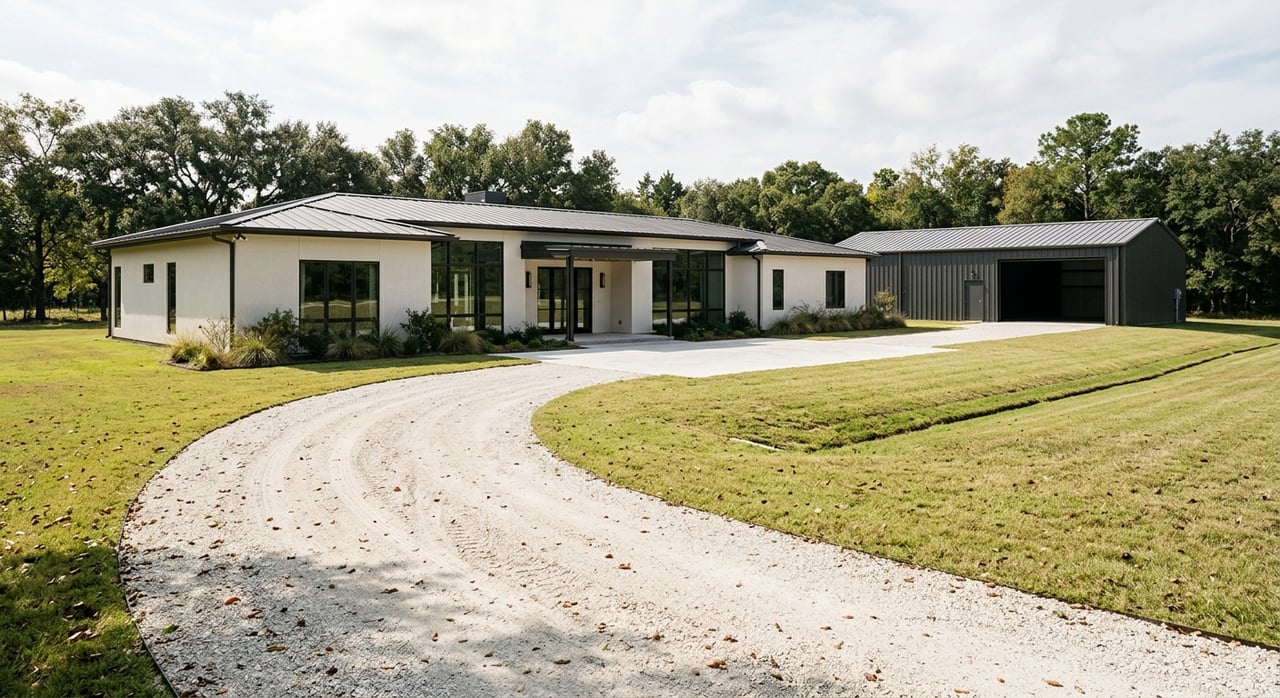
If you are looking at land near Arcadia, it helps to start with one simple truth: this is not a typical fast-growth subdivision story. Arcadia and greater DeSoto County are better understood as a working-land market where ranch acreage, pasture, citrus land, and long-term holding strategies often matter more than quick density plays. If you want to invest with more clarity, this guide will walk you through what drives value, what can affect your exit, and what to confirm before you buy. Let’s dive in.
Why Arcadia draws land investors
Arcadia sits at the crossroads of US 17 and State Route 70, and the city describes itself as centrally located between Orlando, Fort Myers, Sarasota, and Lake Okeechobee. That regional access helps explain why investors keep Arcadia on the radar, even though it is not a coastal-front market. You are looking at an inland Southwest Florida location with reach into multiple surrounding corridors, not a beach-driven pricing environment.
That difference matters when you evaluate upside. In Arcadia, land value often comes from utility, access, and optionality over time rather than from immediate suburban conversion. For many investors, that creates opportunity, but only if you match the parcel to a realistic hold and exit strategy.
Understand city versus county rules
One of the first diligence steps is confirming whether the parcel is inside the City of Arcadia or in unincorporated DeSoto County. The city has its own Planning & Zoning framework, while the county oversees unincorporated land through its planning and zoning process. That distinction can shape permitted uses, review timelines, and future expectations for the property.
DeSoto County states that its planning and zoning staff review development applications for consistency with the county comprehensive plan and to make sure infrastructure and services can support development. The City of Arcadia code also notes that annexed land may remain under county land use and zoning regulations until the city adopts new regulations. In practical terms, you should never assume jurisdiction based only on a mailing address or a map pin.
What zoning means for land value
For most acreage investors, the key issue is not just what a parcel is zoned for today. The bigger question is what that zoning realistically allows during your ownership period.
According to DeSoto County’s Future Land Use Element, the Rural/Agricultural category is intended to protect agricultural activities, open space, and rural residential uses. Farm uses are allowed, and residential density is generally limited to about one home per 10 gross acres unless otherwise provided. That framework is central to how many Arcadia-area land deals should be underwritten.
The same county document says industrial rezoning in Rural/Agricultural areas requires Board approval in connection with a Special Exception or Planned Unit Development, must include at least 10 acres, and must be buffered from agricultural and residential uses. That tells you something important: more intensive future use may be possible in some cases, but it is not automatic. If your investment thesis depends on a major change in use, your risk profile is very different from someone buying for agricultural utility or low-density holding value.
Older zoning can still affect a deal
Not every parcel fits a simple current-model zoning story. The county plan recognizes older residential zoning districts, including A-5, as legal and conforming until modified. That means some properties are still shaped by an older zoning pattern rather than by a clean, master-planned suburban framework.
For you as an investor, that makes parcel-level review essential. Two tracts with similar acreage can have very different use potential, density assumptions, or entitlement paths depending on their existing zoning history and future land use designation.
Arcadia is a true agricultural market
The agricultural numbers in DeSoto County help explain why Arcadia land behaves differently from more urbanized Southwest Florida markets. The USDA’s 2022 county profile shows 689 farms, 293,944 acres in farms, and an average farm size of 427 acres in DeSoto County. It also reports 75,001 acres of cropland, 164,526 acres of pastureland, and 58,322 irrigated acres.
That same USDA county profile shows crops accounted for 83% of sales, while livestock, poultry, and related products made up 17%. Florida’s 2024 citrus statistics also place DeSoto County at 51,800 commercial citrus acres, second in the state behind Polk County. Those figures support a clear takeaway: if you are investing in Arcadia acreage, you are entering a market with a real agricultural base, not a purely speculative land environment.
Best land types for investors
The strongest opportunities often line up with land types that already fit county patterns and demand drivers. In the Arcadia area, that usually includes:
- Ranch and pasture land with usable access and long-term hold potential
- Citrus-oriented acreage where agricultural utility is part of the value story
- Low-density rural tracts that appeal to end users or long-term investors
- Parcels near key corridors where access may support stronger future optionality
This does not mean every property near Arcadia has the same upside. A tract with frontage, access, and practical agricultural use may be easier to underwrite than an isolated interior parcel that depends on a future zoning change. In this market, current usefulness often matters just as much as future possibility.
Growth is selective, not everywhere
A common mistake is assuming all Southwest Florida land will convert at the same pace. DeSoto County’s zoning criteria narrative points to an existing development pattern that generally follows US Highway 17, State Roads 70 and 72, State Road 31, and County Road 769, along with Arcadia and community nodes like Nocatee, Fort Ogden, and Lake Suzy/Southwest DeSoto.
The same document says land use categories that support suburban to urban development make up only about 6 percent of county land area, while Rural/Agricultural covers 73.4 percent. That is a major clue for investors. In Arcadia and greater DeSoto County, growth pressure appears more corridor-based than countywide.
How to think about hold time
Because most rural land is intended to stay rural, it usually makes sense to underwrite acreage first as a property with current use value. Future development upside may exist, but it often works best as a secondary benefit, not the only reason to buy.
Parcels with road frontage, strong access, nearby utilities, or adjacency to growth corridors may offer more credible long-term upside. More isolated tracts can still make sense, but they often depend more on agricultural income, ranch use, or end-user resale demand than on near-term entitlement changes. In other words, your hold strategy should match what the parcel can do now, not just what you hope it can do later.
Agricultural classification affects carry costs
Many investors confuse agricultural zoning with agricultural tax treatment, but they are not the same thing. DeSoto County’s Property Appraiser states that agricultural classification applies only to land used primarily for bona fide agricultural purposes, requires a March 1 filing deadline, and is not transferable on sale.
That can have a real effect on your numbers. If a parcel loses agricultural classification, or never qualifies after closing, your carrying costs may look very different from what you expected. Before you buy, it is smart to confirm not only the zoning and land use category, but also whether the tax treatment is in place and what would be required to maintain it.
Risk factors to review early
Land investing near Arcadia can be attractive, but it also requires disciplined diligence. DeSoto County’s Local Mitigation Strategy is intended to reduce long-term impacts from natural and man-made hazards, which reinforces the importance of reviewing site-specific risk factors before you commit.
For many buyers, the biggest practical questions involve:
- Floodplain exposure
- Drainage conditions
- Well yield and irrigation planning
- Road access and frontage
- Easements or use restrictions
- Wetlands or environmental constraints
The research also notes a severe regional water shortage notice affecting DeSoto County and watering restrictions in the City of Arcadia. For ranch, grove, or long-hold acreage buyers, water planning is not a side issue. It can directly affect operations, costs, and long-term property performance.
Watch for mining-related overlays
A portion of southwest DeSoto parcels is affected by the Generalized Phosphate Mining Overlay Designation. If a property is in or near that area, it is worth taking a closer look at title, mineral rights, reclamation history, and possible future-use restrictions before you price your exit.
This is one of those details that can easily be missed if you only focus on acreage, road frontage, and a price-per-acre comparison. In a market like Arcadia, overlays and historic land-use factors can matter just as much as the visible features of the property.
Questions to answer before buying
Before you move forward on an Arcadia-area land or ranch investment, try to answer these questions clearly:
- Is the parcel inside Arcadia city limits or in unincorporated DeSoto County?
- What are the current zoning and future land use designations?
- Does the property qualify for agricultural classification, and what happens after the sale?
- Is there enough road access, water, and drainage support for your intended use?
- Are there overlays, easements, wetlands, or mineral issues that could affect value or resale?
- Are you buying for present utility, long-term hold, or a specific entitlement strategy?
The more clearly you can answer those questions, the better your underwriting will be. This market can reward patient, informed investors, but it tends to favor realism over speculation.
A practical Arcadia investment approach
The bottom line is that Arcadia is best viewed as an inland acreage market shaped by agricultural use, low-density holding value, and selective corridor-driven appreciation. The county’s framework keeps most rural land rural, so many of the most realistic exits involve ranch resale, agricultural resale, or a carefully planned entitlement path rather than a fast subdivision play.
If you want to invest well in Arcadia, focus on what the land can support today, what the jurisdiction allows, and how your exit aligns with the property’s actual strengths. That kind of disciplined approach can help you avoid expensive assumptions and uncover opportunities that fit both your timeline and your risk tolerance.
When you are ready to evaluate land, ranch, or investment opportunities in Southwest Florida with a local, strategy-first perspective, connect with Carla Nix for personalized guidance.
FAQs
What makes Arcadia land different from coastal Southwest Florida investments?
- Arcadia land is generally driven more by agricultural use, acreage utility, and long-term optionality than by immediate coastal or suburban development pressure.
What should you check before buying land in Arcadia, DeSoto County?
- You should confirm jurisdiction, zoning, future land use, agricultural classification status, access, water and drainage conditions, and any overlays or mineral-related issues.
What does Rural/Agricultural land use mean in DeSoto County?
- DeSoto County’s Rural/Agricultural category is meant to protect agricultural activities, open space, and rural residential uses, with residential density generally limited to about one home per 10 gross acres unless otherwise provided.
Why does agricultural classification matter for Arcadia investors?
- Agricultural classification can affect property taxes and carry costs, and it is separate from zoning, requires qualifying use, and does not automatically transfer after a sale.
Where is growth pressure strongest around Arcadia and DeSoto County?
- County planning documents suggest growth pressure generally follows corridors such as US 17, State Roads 70 and 72, State Road 31, and County Road 769, along with nodes like Arcadia, Nocatee, Fort Ogden, and Lake Suzy/Southwest DeSoto.
Are all Arcadia land investments best suited for development?
- No, many parcels are better suited for agricultural use, ranch holding, or low-density long-term ownership, while more intensive development often depends on additional approvals or entitlement work.